Popular Posts

Showing posts with label Climate change. Show all posts

Thursday, December 19, 2013

Hack the Planet? Geoengineering Research, Ethics Explored


Hacking the Earth’s climate to counteract global warming – a subject that elicits strong reactions from both sides – is the topic of a December special issue of the journal Climatic Change. A dozen research papers include the most detailed description yet of the proposed Oxford Principles to govern geoengineering research, as well as surveys on the technical hurdles, ethics and regulatory issues related to deliberately manipulating the planet’s climate.

Univ. of Washington researchers led the three-year project to gather leading thinkers and publish a snapshot of a field that they say is rapidly gaining credibility in the scientific community.

“In the past five years or so, geoengineering has moved from the realm of quackery to being the subject of scientific research,” says co-editor Rob Wood, a UW associate professor of atmospheric sciences. “We wanted to contribute to a serious intellectual discourse.”

Creating clouds over the ocean that would reflect back sunlight is the subject of a chapter by Wood, whose research is on the interaction among air pollution, clouds and climate. He and co-author Tom Ackerman, a UW atmospheric sciences professor, look at what it would take to test the idea with a field experiment.

Sunday, August 4, 2013

Climate change on pace to occur 10 times faster than any change recorded in past 65 million years, Stanford scientists say

Not only is the planet undergoing one of the largest climate changes in the past 65 million years, Stanford climate scientists Noah Diffenbaugh and Chris Field report that it's on pace to occur at a rate 10 times faster than any change in that period. Without intervention, this extreme pace could lead to a 5-6 degree Celsius spike in annual temperatures by the end of the century.


Image: The top map shows global temperatures in the late 21st century, based on current warming trends. The bottom map illustrates the velocity of climate change, or how far species in any given area will need to migrate by the end of the 21st century to experience climate similar to present.

The planet is undergoing one of the largest changes in climate since the dinosaurs went extinct. But what might be even more troubling for humans, plants and animals is the speed of the change. Stanford climate scientists warn that the likely rate of change over the next century will be at least 10 times quicker than any climate shift in the past 65 million years.

If the trend continues at its current rapid pace, it will place significant stress on terrestrial ecosystems around the world, and many species will need to make behavioral, evolutionary or geographic adaptations to survive.

Although some of the changes the planet will experience in the next few decades are already "baked into the system," how different the climate looks at the end of the 21st century will depend largely on how humans respond.

The findings come from a review of climate research by Noah Diffenbaugh, an associate professor of environmental Earth system science, and Chris Field, a professor of biology and of environmental Earth system science and the director of the Department of Global Ecology at the Carnegie Institution. The work is part of a special report on climate change in the current issue of Science.

Thursday, July 25, 2013

Arctic methane 'time bomb' could have huge economic costs

Scientists say that the release of large amounts of methane from thawing permafrost in the Arctic could have huge economic impacts for the world.

Increasing temperatures in the Arctic region are reducing sea ice cover and increasing the possibility of methane leaching from the sea bed
The researchers estimate that the climate effects of the release of this gas could cost $60 trillion (£39 trillion), roughly the size of the global economy in 2012.

The impacts are most likely to be felt in developing countries they say.

The research has been published in the journal Nature.

Scientists have had concerns about the impact of rising temperatures on permafrost for many years. Large amounts of methane are concentrated in the frozen Arctic tundra but are also found as semi-solid gas hydrates under the sea.

Price of gas
Previous work has shown that the diminishing ice cover in the East Siberian sea is allowing the waters to warm and the methane to leach out. Scientists have found plumes of the gas up to a kilometre in diameter rising from these waters.

Sunday, July 14, 2013

'Anthropocene' Period Would Recognize Humanity's Impact on Earth

The Anthropocene is the name of a proposed new geological time period (probably an epoch) that may soon enter the official Geologic Time Scale. The Anthropocene is defined by the human influence on Earth, where we have become a geological force shaping the global landscape and evolution of our planet.
According to this idea, the present epoch — still known as the Holocene, which started 11,000 years ago — would have ended somewhere between the end of 18th century and the 1950s (when the Anthropocene began). The earlier time limit considers the increasing amount of carbon dioxide and other greenhouse gases in Earth’s atmosphere that is mostly due to the burning of fossil fuels for energy to power our growing industrial technology.
We may consider this process to have started in 1784, with the invention of the steam engine by James Watt. The present high levels of greenhouse gases in our atmosphere are probably causing global warming. The later time period takes into account the increasing background radiation from the nuclear tests by the United States and the Soviet Union during the beginning of the Cold War. 
This new frontier in the geological timeline is potentially more precisely defined than any was before due to its recent occurrence. The Antrhopocene is also supported by increasing evidence of human influence on natural global processes, such as the sediment transport being supplanted by our construction processes; land occupation and transformation; water course deviation and water reserve appropriation; massive extinction and introduction of invasive species; development and widespread use of previously non-existent chemical substances (eg. plastics and persistent organic pollutants); and even the creation of new elements (the last 20 in the periodic table).
In this interview, Dr. David Grinspoon, Baruch S. Blumberg Chair of Astrobiology at the Library of Congress and Curator of Astrobiology at the Denver Museum of Nature & Science, talks about a book he is writing on the Anthropocene from an astrobiology point of view.

Tuesday, June 4, 2013

Study: Increased carbon dioxide may lead to greener deserts

But researchers warn that CO2 fertilization could also result in other environmental shifts.

Increased levels of atmospheric carbon dioxide may have contributed to a gradual greening of some desert regions over the past 30 years, a process that will continue, according to a new study. But the authors warn that this "CO2 fertilization effect" could also have consequences for native plants and the wildlife that depends on them.

The study, published May 15 in the journal Geophysical Research Letters, was conducted by researchers from the Commonwealth Scientific and Industrial Research Organization (CSIRO), Australian National University and the Australian Research Council Centre of Excellence for Climate System Science.

The researchers went into this project knowing that satellite data collected since the 1980s has shown a worldwide increase in green foliage. Scientists around the world have theorized that this may have been a result of increased levels of CO2, a theory this new study supports. The authors of this new study looked at desert areas on four continents — where increases in vegetation would be easier to see and quantify — and created a mathematical model to calculate how they might have been affected by CO2 fertilization. With those calculations in hand, they then compared their predications to satellite imagery data from 1982 to 2010.

Friday, July 20, 2012

Pumping Up Plankton

Science and techno world topic: Climate change

The idea of fighting global warming by dumping iron in the oceans to fertilize plankton—tiny plants that absorb carbon dioxide—gets a new boost today with a study in the journal Nature (pictured: a natural plankton bloom off Antarctica).

One of several last-ditch fixes proposed to fight climate change, iron dumping has long been proposed as a "geoengineering" strategy—a way to manipulate the climate to reduce the effects of heat-trapping greenhouse gases.

Some studies, however, have suggested that, over time, iron fertilization can create low- to no-oxygen conditions—dangerous for marine life—or trigger blooms of types of plankton that are harmful to some organisms.

The new study, though, finds no evidence for these concerns. Instead, most of the plankton in iron-enriched waters falls to the seafloor and gets buried in ocean sediments, which trap carbon long-term, the study found.

Friday, June 8, 2012

Warn of the "Rio +20" Summit: UN experts on eco-collapse

Science and techno world topic: Climate change


It is an indictment on 525 pages. Two weeks before the summit "Rio +20" in Brazil to warn UN experts strongly that the international environment makes little progress.
Rio de Janeiro - Experts from the United Nations has issued the world's environmental policy a damning testimony. The United Nations Environment Program (UNEP) warns in his new report, "Geo-5”, one-third of 90 major environmental goals have been achieved over the past five years, no progress. At 40 there was some improvement.
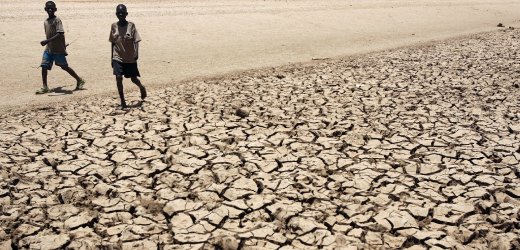
Drought in Kenya
Significant advances have given it only in four areas. Specifically, there
·         less ozone-damaging gas in the atmosphere ,
·         less pollution of the seas,
·         less lead in fuels,
·         more people with access to clean water.