|
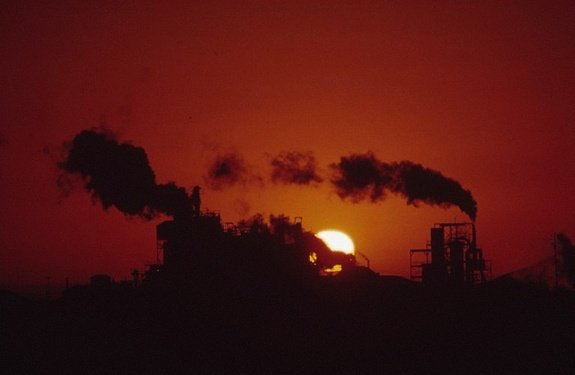
| Basalt formations, such as these towers on the Columbia River in Washington state, could be used to trap carbon dioxide. |
Two experiments test viability of sequestering emissions in porous layers of hard rock.
By early August, scientists will have pumped 1,000 tonnes of pure carbon dioxide into porous rock far below the northwestern United States. The goal is to find a permanent home for the carbon dioxide generated by human activities.
Researchers at the US Department of Energy’s Pacific Northwest National Laboratory (PNNL) in Richland, Washington, began the injections into the Columbia River Basalt formation near the town of Wallula on 17 July. The rock contains pores created as many as 16 million years ago, when magma flowed across what is now the Columbia River Basin. Bubbles of CO2 migrated to the edges of the magma as it cooled, forming layers of holes sandwiched between solid rock.
In pumping emissions back underground, “we are returning the carbon dioxide from whence it came”, says Pete McGrail, an environmental engineer at the PNNL who is heading the experiment, part of a larger energy-department programme on ways to sequester carbon.

The Wallula project is the second of two worldwide to target basalt formations, which scientists hope can hold — and permanently mineralize — vast quantities of gas. In basalt, dissolved CO2 should react with calcium and magnesium to form limestone over the course of decades. Until the gas is locked away, the porous basalt layers are capped by solid rock that will prevent leaking. That should eliminate concerns about leakage that have dogged other proposals to store CO2 deep underground, often in sandstone reservoirs.
The basalt reactions are part of a natural weathering process that has helped to regulate atmospheric CO2 levels throughout geological time. Scientists have analysed mineralization in the lab, but it is only now being tested in the field.